
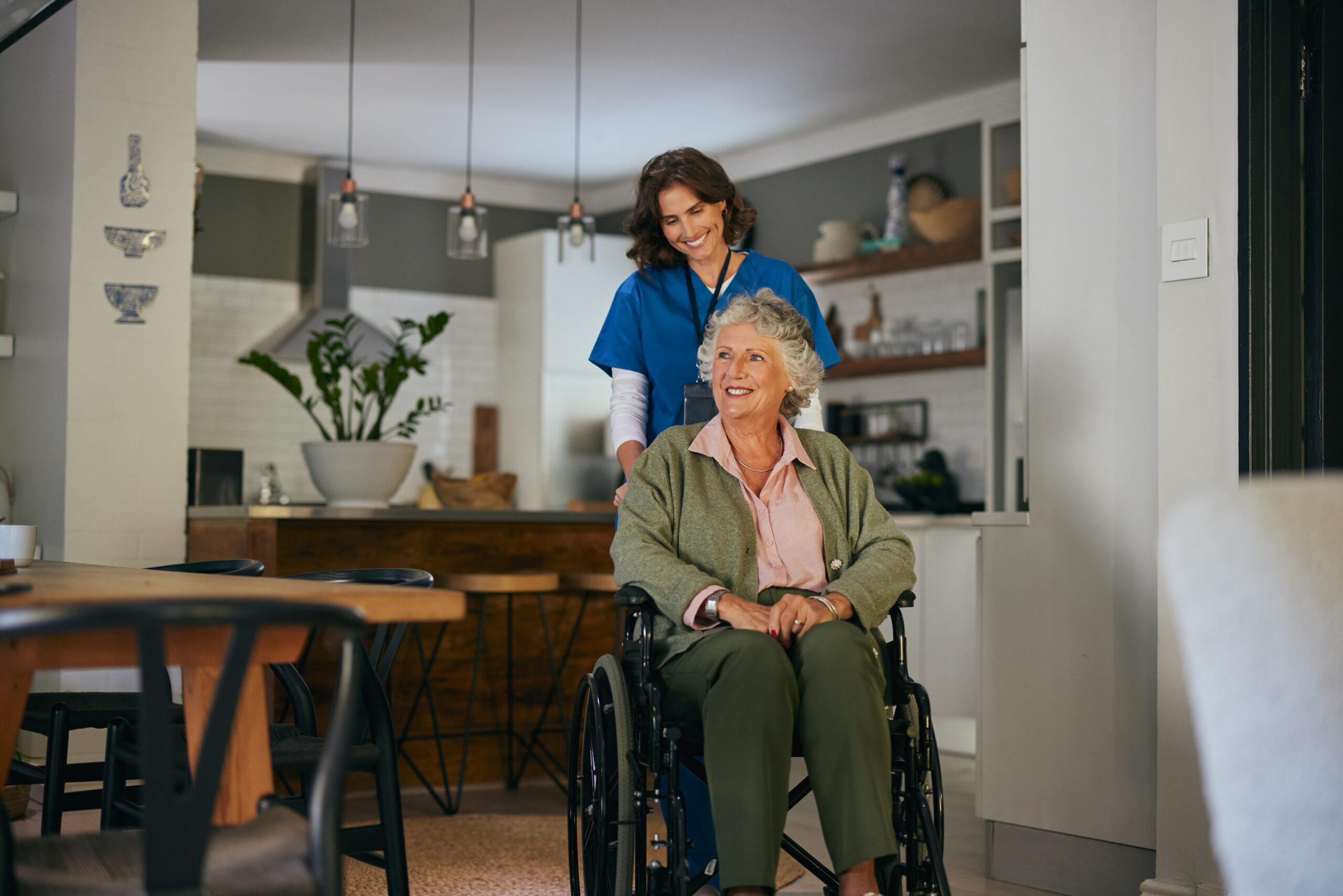
There often comes a point when you start to wonder:
“Is Mom really doing okay on her own?”
Or maybe it’s Dad.
You may notice little things at first. They’re moving a little slower. The house isn’t quite as tidy. They’re having trouble getting around, or they’ve stopped doing some of the things they used to enjoy.
It can be difficult to know when those changes are simply part of getting older and when it’s time to consider some additional support.
The good news is that needing a little help doesn’t mean giving up independence. In many cases, the right support can actually help someone remain safely and comfortably at home longer.
Watch for Changes in Mobility
Has your loved one started having trouble getting up from a chair, climbing stairs or walking longer distances?
Maybe they’ve had a fall — or they’re becoming more hesitant because they’re afraid they might fall.
Changes in strength, balance and mobility are important to pay attention to. Physical therapy can help address these challenges and work toward improving strength, balance, mobility and confidence.
Everyday Tasks Are Becoming More Difficult
Pay attention to the things your loved one does every day.
Are they having trouble getting dressed, bathing, preparing meals or moving safely around the house?
Sometimes these changes happen gradually, and family members don’t realize how much difficulty their loved one is experiencing until they spend more time together.
Therapy and other in-home support can help people work on the skills they need to remain as independent as possible.
They’re Losing Confidence
This one can be easy to overlook.
Maybe your parent used to go shopping, attend church, visit friends or work in the garden — but they’ve slowly stopped doing those things.
Sometimes the issue isn’t that they don’t want to participate. They may simply no longer feel confident doing them safely.
Helping someone regain strength and confidence can open the door to doing more of the things they enjoy.
Family Members Are Doing More
If you’re spending more and more time managing medications, preparing meals, helping with appointments, doing household tasks or checking in several times a day, it may be a sign that additional support would be helpful.
That doesn’t mean your family isn’t doing enough.
In fact, recognizing that you can’t — and shouldn’t have to — do everything yourself is an important part of caring for someone you love.
Professional care can give family members another set of hands while still keeping the focus on the individual.
A Recent Illness or Hospital Stay Has Changed Things
Sometimes the need for additional support becomes obvious after an illness, surgery or hospital stay.
Someone who was managing perfectly well a few weeks ago may suddenly have difficulty walking, bathing, preparing meals or getting around the house.
That’s where in-home healthcare and therapy can be especially valuable.
Instead of immediately having to leave the familiar surroundings of home, patients may be able to receive professional support while working toward getting back to their normal routines.
Independence Doesn’t Mean Doing Everything Alone
One of the biggest misconceptions about receiving help at home is that it means someone is no longer independent.
It can actually be the opposite.
The right support can help someone maintain independence.
At Continued Care, our team works with patients and families to provide professional care and therapy in the comfort of home. Our goal is to help people remain safe, active and as independent as possible while giving families confidence that their loved one has the support they need.
If You’re Wondering, It’s Okay to Ask
You don’t have to wait for a crisis before asking questions.
If you’ve started noticing changes in a parent, spouse or loved one, it may be worth having a conversation about what kind of support could make life easier and safer.
And you don’t have to figure it out by yourself.
If you’re wondering whether someone you love could benefit from additional support at home, reach out to Continued Care. We’re happy to listen, answer your questions and help you explore your options.
Sometimes the first step toward getting help is simply starting the conversation.
Continued Care, Inc. — Helping people live more independently, comfortably and confidently at home.
0 Comments